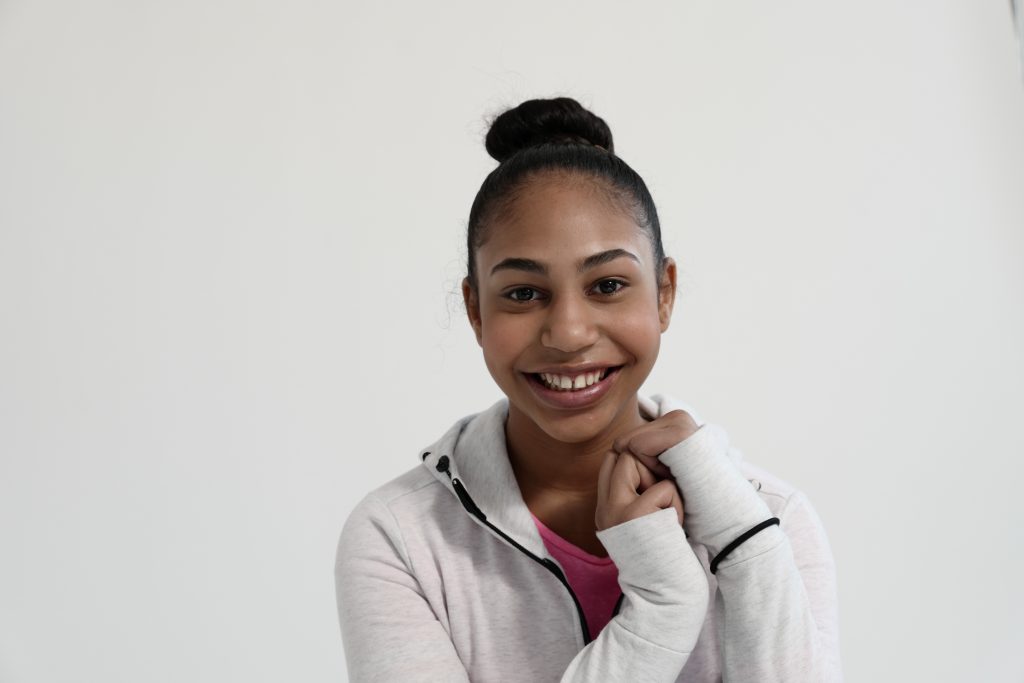

SAY: Speech was created to support children who stutter and their families by addressing their individual needs and goals for change. Since speech therapy goals and needs vary by age, SAY offers a targeted approach for pre-school-aged children, school-aged children, and teens.
Pre-School Aged Children
When a child begins to stutter, parents are often told, “All kids stutter; it’s just a phase” or “Just give it some time. It will stop on its own.” It’s true that many young children go through periods when their speech is less smooth as they are learning new words and putting sentences together. However, there are important differences between typical speech disfluencies that happen during language development and true stuttering. The tricky part is that developmental language formulation disfluencies and true stuttering often sound very similar. It may be difficult to know what you are hearing, even for experienced professionals who do not specialize in stuttering. If you have any concerns, follow your instincts and get an opinion from a speech therapist who specializes in working with young children who stutter.
If therapy is recommended, families of preschoolers often begin with a parent training program. A speech therapist will work closely with your family to help you understand stuttering and learn strategies that can support your child’s communication. The goal is to create an environment where your child feels comfortable speaking and can continue to build confidence and enjoyment in communication.
Although therapy often focuses on changes that family members can make, this does not mean that anything your family did caused your child’s stuttering. Childhood-onset stuttering is not caused by parenting style, the way you talk with your child, or a stressful or traumatic event. Stuttering happens because of a combination of factors, including a child’s natural predisposition to stutter. There are many things we can do together to support easier, more comfortable communication and help your child feel confident as a speaker.
In short:
- Although they sound similar, not all disfluencies are created equal. If you have concerns, it is wise to seek support from a speech therapist who specializes in working with young children who stutter.
- If your child is stuttering, it is NOT your fault! There is so much you can learn to do to support your child in becoming a confident, effective communicator, whether or not they continue to stutter!
If your child is between the ages of 2 and 6 and you have concerns that they are stuttering, please schedule a free consultation or contact Brooke Leiman Edwards, MA, CCC-SLP, BCS-SCF at 646.403.3519 or Brooke@SAY.org.
Book a Free Consultation

Learn more about SAY: Speech therapy services and fees. No child is turned away for financial reasons! Ask about our sliding scale fees that ensure every child has access to SAY: Speech.