
Back to School with Confidence
SAY’s mission is to empower, educate, and support young people who stutter and the world that surrounds them. As a new school year begins, we know parents, caregivers, teachers, and SLPs are working hard to set students up for success. At SAY, we believe every young person who stutters deserves a supportive community where their voice is always heard. But we also know that school can sometimes be a challenging place for children who stutter.
That’s why we’ve created a free Back-to-School Toolkit—a collection of printable resources you can use and share to help children who stutter feel confident and supported at school.
At SAY, we believe that all children who stutter deserve to have a supportive community around them, where they will always have a voice. We also know that school can be a tough place for children who stutter. For some, the pressures may be self-imposed, and the child who stutters may go to great lengths to try to hide the fact that they stutter. For others, the pressure they experience may occur in the form of bullying and discrimination. They may encounter bullying and discrimination from their classmates, or even from teachers and other adults who work there.
Many people—students, teachers, and speech therapists—may be misinformed about stuttering. The most important way to support a child who stutters is to build community and educate others about stuttering.
- For parents, you (or your child) should bring up stuttering with teachers and others who work with your child at school:
- Send an email
- Have a conversation with teachers or administration over the phone
- Schedule an in-person meeting with school staff
- Invite school staff to see a SAY performance to see a stutter-affirming environment in action!
Here are some things to include when educating others about stuttering:
- People who stutter just need a little extra time to speak. You don’t need to finish their words or help them when they are stuttering – you just need to listen.
- Stuttering is nobody’s fault. Stuttering happens because of subtle differences in the brain’s pathways during speech. It is not brain damage or injury; it’s a variation in the way that some people talk.
- Stuttering is variable. Stuttering changes over time and may be different from day to day, month to month, or even hour to hour! This can be confusing to some listeners (and frustrating for many people who stutter), but remember: this is very typical for people who stutter.
- Stuttering cannot be “cured.” While some young children may outgrow stuttering after 6 months to a year, there are other children who will persist into adulthood. This is not because of anything they or their family did wrong. Even though stuttering can’t be cured, receiving support from their loved ones, the stuttering support community, and/or a speech pathologist can help people who stutter make positive changes to how stuttering impacts their ability to confidently communicate.
Talk to your child to learn more about what they want others to know about themselves or stuttering. In addition to teachers, you can look to build community by speaking with speech therapists, social workers, guidance counselors, or coaches. Especially if your child has other learning needs or mental health challenges, getting help from any of these other individuals can make a big difference.
Even if your child is not yet ready to be the one to educate their teachers and school staff, include them in deciding what you say and consider having them there to watch you do it. By educating others about stuttering, you can help school staff better understand what your child is experiencing and how they can help
What is an Individualized Education Plan (IEP)?
There are federal requirements for public schools to provide all children with a “free and appropriate” education. If any child has a difference that would limit their ability to participate and learn in class, then the school is required to make a plan (if the parent agrees) to accommodate and support the child so they get the same quality of education as their peers.
IEPs are one way that public schools meet these federal requirements. There are other options (such as a 504 Plan, covered in the next section), but you must have an IEP if you want your child to have additional services at school (such as speech therapy). Note: Private schools may meet federal requirements in different ways and may use different plans. An IEP does not mean that there is anything “wrong” with your child. An IEP is just a legal document that defines the plan for any special education or support services that a child will receive in public schools. It lays out goals for the child to be working towards and also states what services the child will receive (and how often they will receive them).
There is a comprehensive evaluation process to figure out who is eligible for an IEP. A parent can request an evaluation at any time! Usually, asking the teacher is the best way to get this process started. The Stuttering Foundation has more information about the evaluation process here: http://bit.ly/2lnixaD
Children who stutter are often eligible for IEPs, especially if stuttering affects their participation in class or in social situations. But not all children who stutter need an IEP.
Benefits of an IEP
There are many situations where IEPs are helpful documents for children who stutter and their parents. An IEP can be helpful if:
- Stuttering is impacting your child’s ability to learn and thrive in the school setting. A skilled, school-based speech therapist can be added to your child’s team to identify reasonable and meaningful goals towards increasing your child’s confidence and independence while communicating at school.
- There is a need for other services, or if there are other classroom concerns, such as special reading or learning needs, in addition to stuttering.
Be a strong advocate. Unfortunately, sometimes not everyone on an IEP team has a good understanding of stuttering. Follow your gut, educate the team about your child, and ask lots of questions. Consult with SAY or a stuttering specialist if something doesn’t feel right.
Parent’s Rights
As a parent, you have many rights related to your child’s IEP. You can, and should, participate in all IEP meetings where decisions about your child’s plan are made. You also have the right to deny consent for services or to contest decisions that you do not agree with. And your child can be a part of the IEP meetings, too. It can make a huge difference for kids to advocate for themselves or for them to hear you advocating for them. They should have a voice in setting their own goals and accommodations.
If stuttering is not impacting your child’s ability to learn and thrive in the school setting, but you still want to be sure that they are provided with accommodations and protections in class, do not fear! A 504 Plan may be a better option for you.
While some children who stutter may benefit from weekly speech therapy sessions through an IEP, not every child will need this type of support. If your child doesn’t have an IEP, there are still meaningful ways to ensure they receive appropriate classroom accommodations and are protected from discrimination.
504 Plans
The Rehabilitation Act of 1974 included a law (called Section 504) to protect people from discrimination based on disability, including students in public schools. The 504 Plan is a formal document that explains how the school and its staff will accommodate the student’s needs to be sure that the child does not have any unfair disadvantages because of their stutter. These accommodations are already included if a student has an IEP. Unlike Individualized Education Plans (IEPs), 504 plans do not typically provide speech therapy. Common accommodations include:
- Additional wait time for the student to speak
- Alternative ways to participate/present and a meeting/s with teachers to build confidence and fade these accommodations over time
- Fair and appropriate grading for presentations to ensure the student isn’t penalized for stuttering
- Alternative reading assessments to accurately determine reading level and not penalize for stuttering
- Monitoring for teasing/bullying
The key is giving students choices and making sure they aren’t penalized for stuttering while still meeting learning standards. Some may rarely use these accommodations, but knowing they exist builds confidence.
Requesting a 504 Plan
To request a 504 Plan, parents should submit a written request (with optional documentation from a doctor or speech therapist). Schools are required by law to accommodate eligible students, and children who stutter qualify because stuttering substantially limits one or more of their major life activities, including speaking and communicating, under Section 504. Use our template linked below!
Even if families face challenges or pushback, the most important step is helping children build confidence and resilience—so support comes not only from school, but also from within.
Resilience is the ability to bounce back from challenges. It grows from strength, hope, and self-compassion—and parents can play a big role in helping children develop it. For kids who stutter, resilience can be especially valuable for coping with communication struggles and building independence.
Even in the most supportive schools, children who stutter may face difficulties. A positive home environment helps prepare them. The most powerful tools parents can offer are listening and empathy. When a child feels truly heard, they feel validated and know their voice matters. For example, if your child stutters while telling you an exciting story, try to focus on their message and share their joy, rather than interrupting with advice about stuttering. Many parents feel frustrated when their child doesn’t want to open up about stuttering. However, even if your child doesn’t take you up on it, knowing that you periodically give them space to share about stuttering is a very powerful thing.
Resilience also grows through confidence and a positive outlook. You can support this by:
- Praising effort and perseverance, not just results
- Helping them recognize their strengths and accomplishments
- Encouraging gratitude, kindness, and perspective
- Encouraging increasing participation and responsibilities along a hierarchy of difficulty with their input
By creating a safe, supportive space at home, parents can help children who stutter feel strong, confident, and ready to face challenges.
It Takes a Village
Who is in your child’s village? Creating a team of people surrounding your child that “get” stuttering is essential. This team should include family members, friends, teachers, etc. Importantly, you and other adults in a child’s world can be role models for resilience. Take time to consider how you respond to hard situations. Can you show patience and empathy to others? Can you find the positive when things don’t go as planned? Can you be okay with your mistakes and take responsibility for your actions?
Your children will see these things in you, and it will help them to better understand themselves as they go to school and develop into independent young adults.
Resilience doesn’t have to do with how much a person stutters. It’s about knowing that you are capable and good enough as you are – no matter how much you do or do not stutter.
Growing up and going to school can be a challenge for any child who stutters. But by building a community of support, understanding your administrative options for support in schools (as with an IEP or 504 Plan), and most importantly, by fostering confidence and resilience at home, your child will be in a position to thrive and to be their best self.
Reach out to us with any questions or concerns about stuttering and how to support children who stutter in any setting.
We’d love to connect with you this school year! If you have questions or would like more information about supporting children who stutter in school, please don’t hesitate to reach out to our Director of SAY: Speech and board-certified speech therapist, Brooke Leiman Edwards, MA, CCC-SLP, BCS-SCF at Brooke@say.org or call us at 212-414-9696.
SAY’s Life-Changing Programs

SAY: Speech
SAY’s speech therapy program is led by a licensed speech-language pathologist and board-certified stuttering specialist. SAY: Speech embraces a holistic approach to stuttering therapy that addresses the individual needs and goals of each child and their family. We currently offer services to families in DC, MD, and NY for ages 3-18. Download our Speech Therapy Brochure.

Confident Voices: NYC
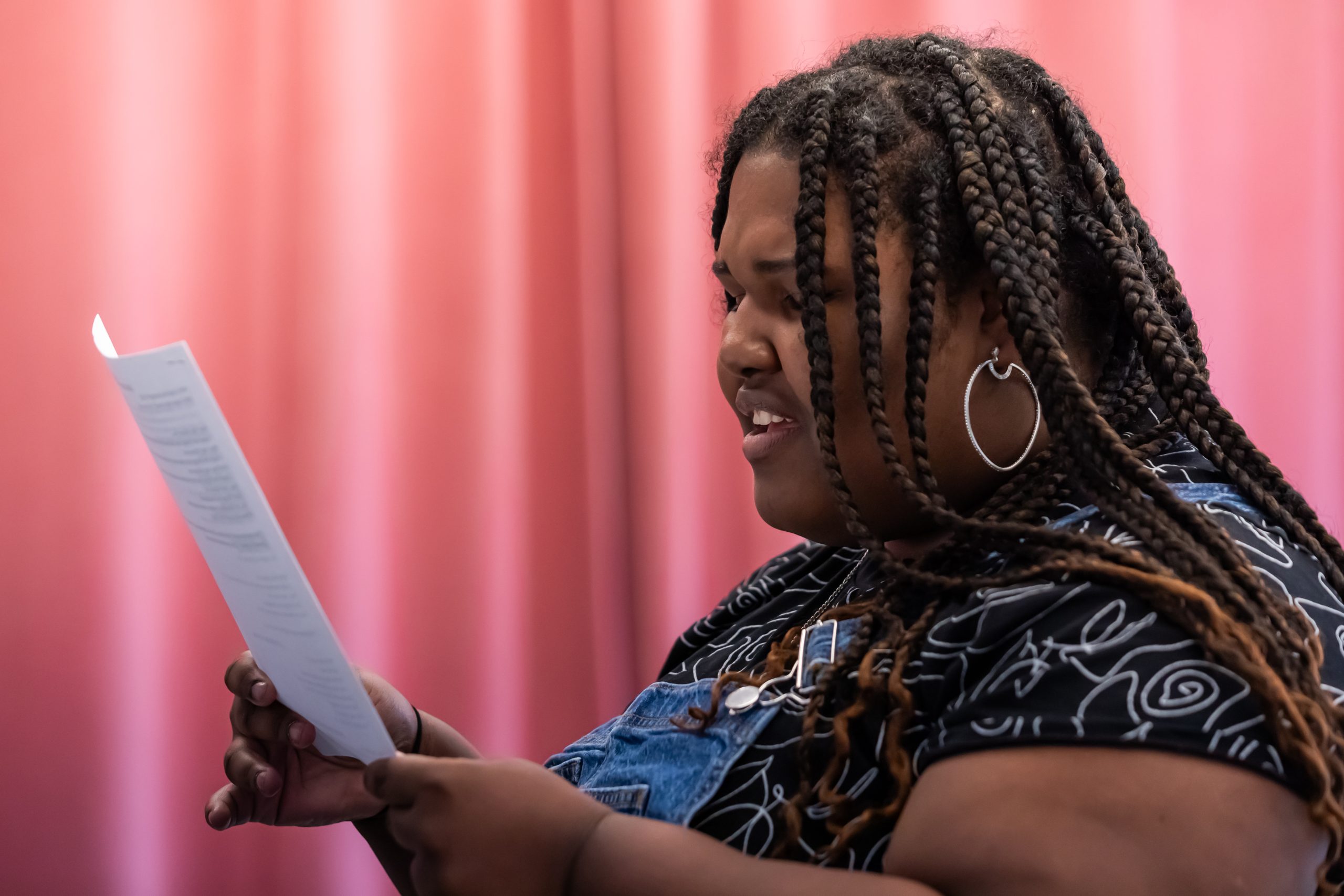
SAY’s award-winning weekend creative arts program takes place in New York City throughout the school year, inspiring imagination and empowerment through collaboration and connection. This project-based program for young people who stutter, ages 8-18, provides a unique forum for participants to express their thoughts, ideas, and dreams freely. Download our Confident Voices Brochure.

Camp SAY
Our 2-week ACA-accredited, sleepaway summer camp for young people who stutter, ages 8-18, combines an exceptional traditional camp experience with specialized programs and activities designed to build confidence, improve communication skills, and forge enduring friendships. Download our Camp SAY Brochure.
SAY: DC
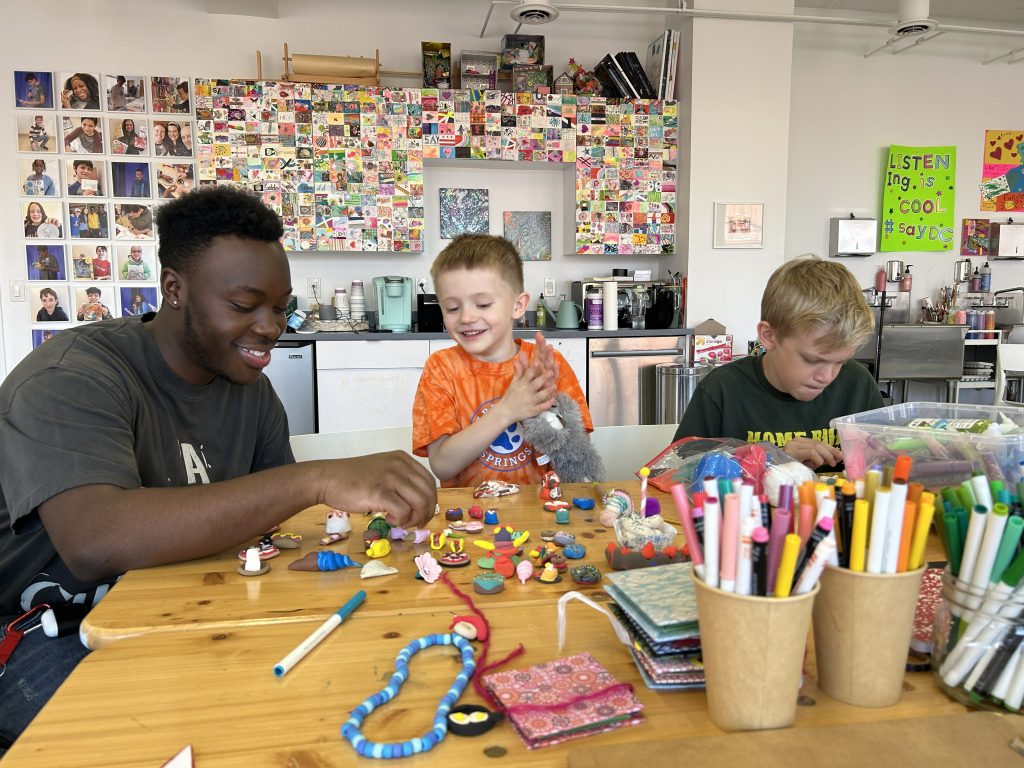
This free weekly creative arts program is offered throughout the school year in Washington, DC, where young people who stutter are supported and encouraged to find their voice. Through the power of listening, artmaking, and connection, participants ages 5-18 come together to create a community of fun, creativity, and imagination.
Camp SAY: Across the USA
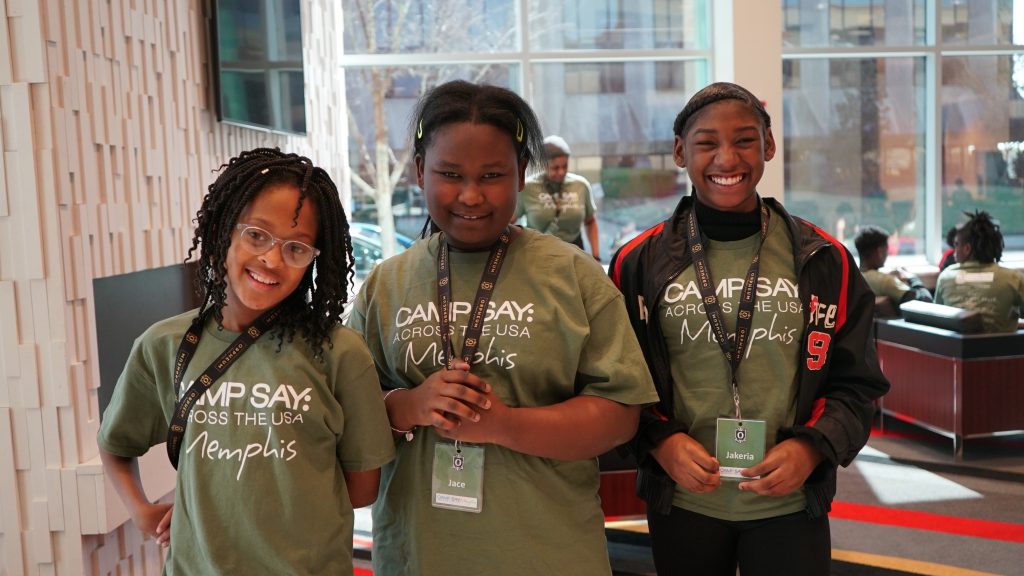
SAY’s regional mini–Day Camp weekend programs bring the transformative Camp SAY experience to cities across the country. Camp SAY: Across the USA is specially designed for kids who stutter, providing fun, self-discovery, and the opportunity to forge lasting bonds with new friends from their area.

My Stutter Project
This unique online program provides a brave and welcoming space for young people who stutter, ages 8-18. Through creative workshops, community, and encouragement, participants build confidence, communication, and self-advocacy skills in a space where others truly understand what they’re going through.